

The Five Steps to Building your Workplace Violence Program
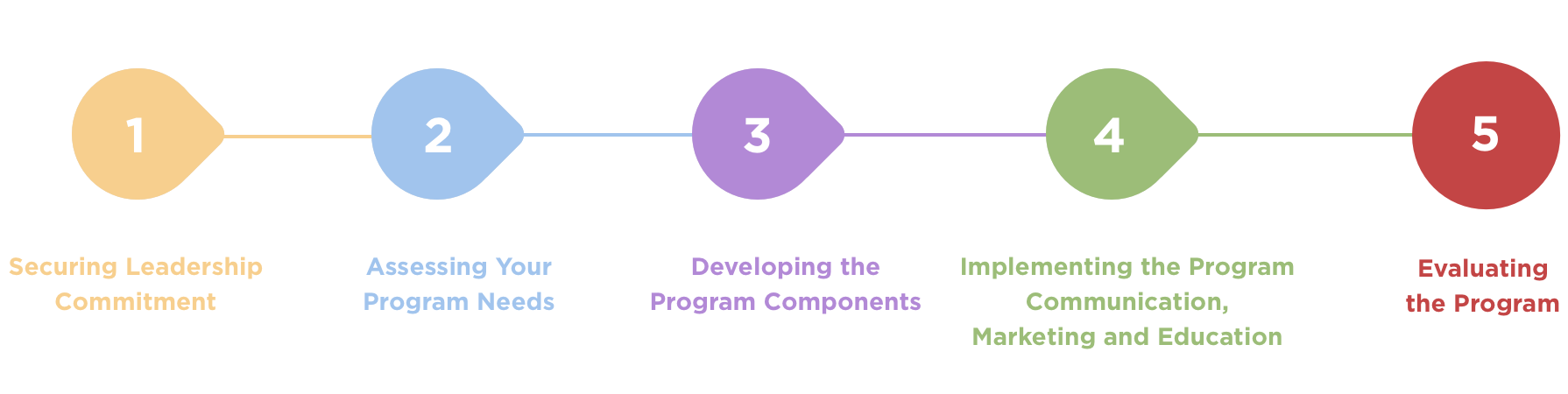
- Step 1 – Securing Leadership Commitment
- Step 2 – Assessing Your Program Needs
- Step 3 – Developing the Program Components
- Step 4 – Implementing the Program: Communication, Marketing and Education
- Step 5 – Evaluating the Program
Step 5 – Evaluating the Program
An organization cannot evaluate effectiveness without measuring indicators. Measuring and evaluating your program is vital in guiding program improvement. Evaluation is a critical component of a workplace violence prevention program to determine the program’s effectiveness and highlight opportunities to enhance the program.2 The set of indicators should be comprehensive, include both leading and lagging indicators from Qualitative and Quantitative sources, and enable performance measurement and reporting at the provincial and the local level.
Goals of program evaluation:
- Create and maintain a safe working environment without the threat of violence
- Review, revise, enhance and improve program components
- Identify and implement corrective measures that may prevent subsequent violent situations
- Modify the program when insufficiencies are identified in policies, procedures, and employee training/education
Quantitative sources of information:
- Violence reporting data
- Environmental assessment data and workplace inspection reports
Qualitative sources of information:
- Data from training evaluations, staff surveys, compliance audits 2
Resources for evaluating your program:
- A set of organizational and provincial indicators
- Additional indicators and a Quality Improvement Plan (QIP) have been recommended for development in the Leadership Table Report
- Health Quality Ontario Tools and Resources
- Accreditation Canada
Reference: 2. PSHSA – A guide to the Development of a Workplace Violence Prevention Program: Implementing the Program in your Workplace.